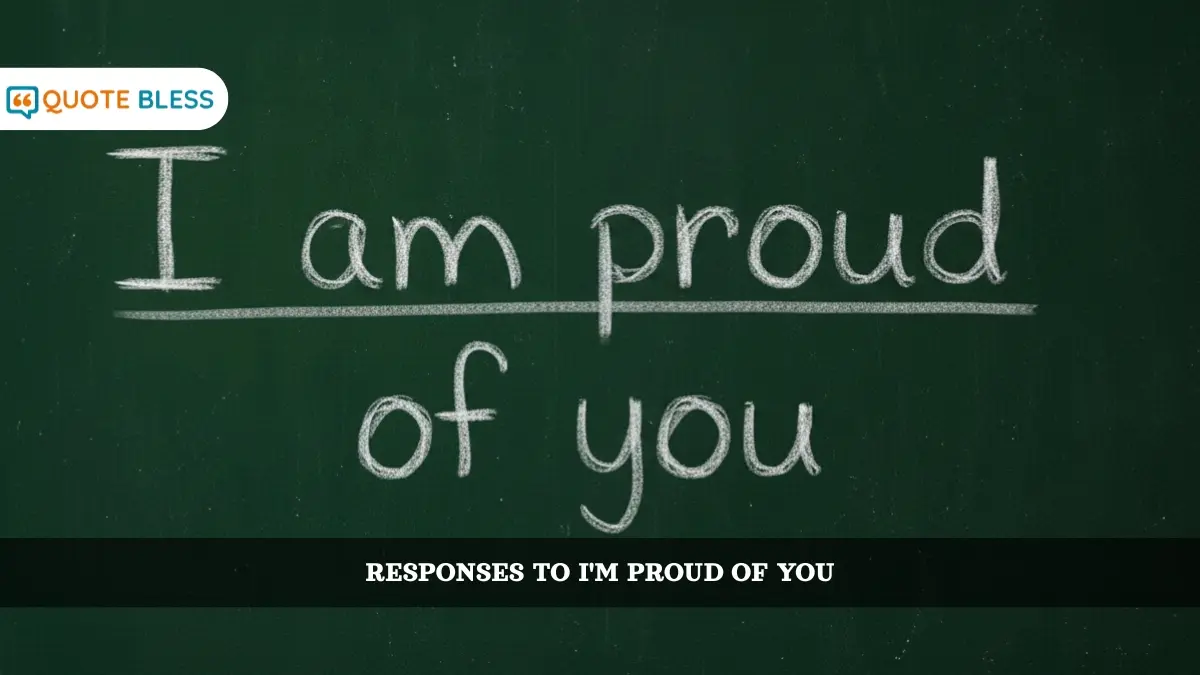
It happens in a split second. Someone looks you in the eye (or sends a text) and says those four heavy words: “I’m proud of you.”
Do you freeze? Do you immediately look at the floor and mumble, “Oh, it was nothing”?
Most of us are terrible at receiving praise. We treat compliments like hot potatoes that we need to throw away as fast as possible. We deflect because we are afraid of looking arrogant, or perhaps we suffer from imposter syndrome and don’t believe we deserve the win.
But rejecting a compliment insults the giver. When someone tells you they are proud, they are offering you a gift of validation. Your job is to accept it.
Here is your complete guide on how to respond to “I’m proud of you” in every scenario, from high-stakes office moments to quiet texts from your partner.
📑 The Praise Playbook
Professional Responses to a Boss or Mentor
Receiving recognition from a superior is a career-defining moment. You want to walk the line between humility and owning your competence. Do not minimize your effort by saying “it was easy.” Instead, validate their leadership and acknowledge the hard work.
The Context: Use these during performance reviews, after a major project launch, or when you have solved a crisis.
The Scripts:
Why this works: These responses show High Agency. You aren’t acting surprised that you succeeded; you are acknowledging that your effort yielded results. This builds trust.
Keep your workplace communication sharp with our guide on Professional Replies to Good Morning.
Emotional Replies to Parents and Family
Family dynamics can be complicated. Sometimes “I’m proud of you” from a parent is what we have waited years to hear. Other times, it catches us off guard. These responses focus on connection, gratitude, and returning the love.
The Context: For graduation, a new job, a life milestone, or just a random Tuesday text from Mom or Dad.
The Scripts:
The Vibe: These scripts are Validating. If you have a good relationship with your parents, telling them that their opinion matters to you is the best gift you can give back.
If you want to send a morning text to your family to start the day right, check out our Good Morning Blessings collection.
Romantic “I’m Proud of You” Responses for Partners
When your partner says they are proud of you, it creates intimacy. It says “I see you and I see your struggle.” Your response should lean into that emotional safety.
The Context: When you’ve had a hard week, achieved a personal goal, or simply survived a difficult situation.
The Scripts:
Why it works: These responses build Secure Attachment. They acknowledge that while you did the work, your partner provided the emotional base camp that made it possible.
Looking for more ways to express affection? Try these Happy Together Quotes for Couples.
Funny & Witty “I’m Proud of You” Replies for Friends
With best friends, sincerity can sometimes feel “cringe.” If your dynamic is based on roasting each other or sarcasm, a super serious “thank you” might feel weird. Use humor to deflect the awkwardness while still accepting the compliment.
The Context: When you pass a test, get a number at a bar, or finally fix your car.
The Scripts:
The Vibe: These are Playful yet Confident. They allow you to accept the win without ruining the banter-heavy dynamic of the friendship.
Need to hype up your bestie? Send them one of these Paragraphs for Your Best Friend.
Humble Responses (When You Feel Imposter Syndrome)
Sometimes people say “I’m proud of you” and you feel like a fraud. You might feel like you just got lucky. It is okay to admit that you are still processing the win, but do not invalidate their praise.
The Context: When you feel overwhelmed, anxious, or unsure if you deserve the credit.
The Scripts:
Why it works: These are Vulnerable. You are being honest about your internal state (anxiety/doubt) while still graciously accepting their external observation (pride).
Short & Aesthetic “I’m Proud of You” Text Replies
Sometimes you don’t need a full sentence. If you are texting and want to keep the vibe light and aesthetic, use these quick replies.
The Context: Instagram DMs, Snapchat, or quick text exchanges.
The Scripts:
The Vibe: This is Low Friction. It acknowledges the message immediately without requiring a heavy emotional conversation.
If you’re in a texting mood, check out our guide on How to Respond to “What’s Up” for more quick scripts.
Responses to “I’m Proud of You” After a Hard Time
When you are recovering from grief, a breakup, or a failure, people will say “I’m proud of you” just for surviving. This is a different kind of pride. It acknowledges resilience, not achievement.
The Context: Recovering from sickness, mental health struggles, or difficult life transitions.
The Scripts:
Why it works: These replies focus on Resilience. They acknowledge the struggle without dwelling on the pain.
Need more help with social scripts? Check out our guide on How to Respond to “I Miss You” to navigate other tricky emotional conversations.
Accepting Your Moment in the Sun
Learning how to respond to “I’m proud of you” is a social skill that pays dividends. When you accept a compliment with grace, you validate the person giving it and you reinforce your own self-worth.
Next time those words come your way, fight the urge to deflect. Take a breath, smile, and own it. You earned it.
Social Cues: Handling the Praise
Why does it feel awkward when someone says they are proud of me?
It usually stems from “Imposter Syndrome” or a childhood conditioning that taught you humility means denying your strengths. Psychologically, if your self-view is negative, positive external feedback creates cognitive dissonance (mental discomfort). The awkwardness is just your brain trying to reconcile the two views.
Is it rude to say “thank you” without returning the compliment?
No. If you just won an award or finished a marathon, the moment is about you. It is perfectly polite to say “Thank you so much” and leave it at that. You do not need to say “I’m proud of you too” unless they also achieved something.
How do I respond if I don’t respect the person saying it?
If a toxic boss or a distant relative says it and it feels manipulative, keep it professional and brief. “Thank you for the feedback” or a simple nod is sufficient. You are not obligated to engage emotionally.
What if I don’t feel proud of myself yet?
Honesty is disarming. It is okay to say, “I’m still critical of my performance, but I appreciate you saying that.” It shows you have high standards but appreciate the support.
Can I use emojis in a professional setting?
Use caution. If it is your boss, stick to text. If it is a work friend on Slack, a “🙌” or “🙏” is usually acceptable. When in doubt, mirror their communication style.